
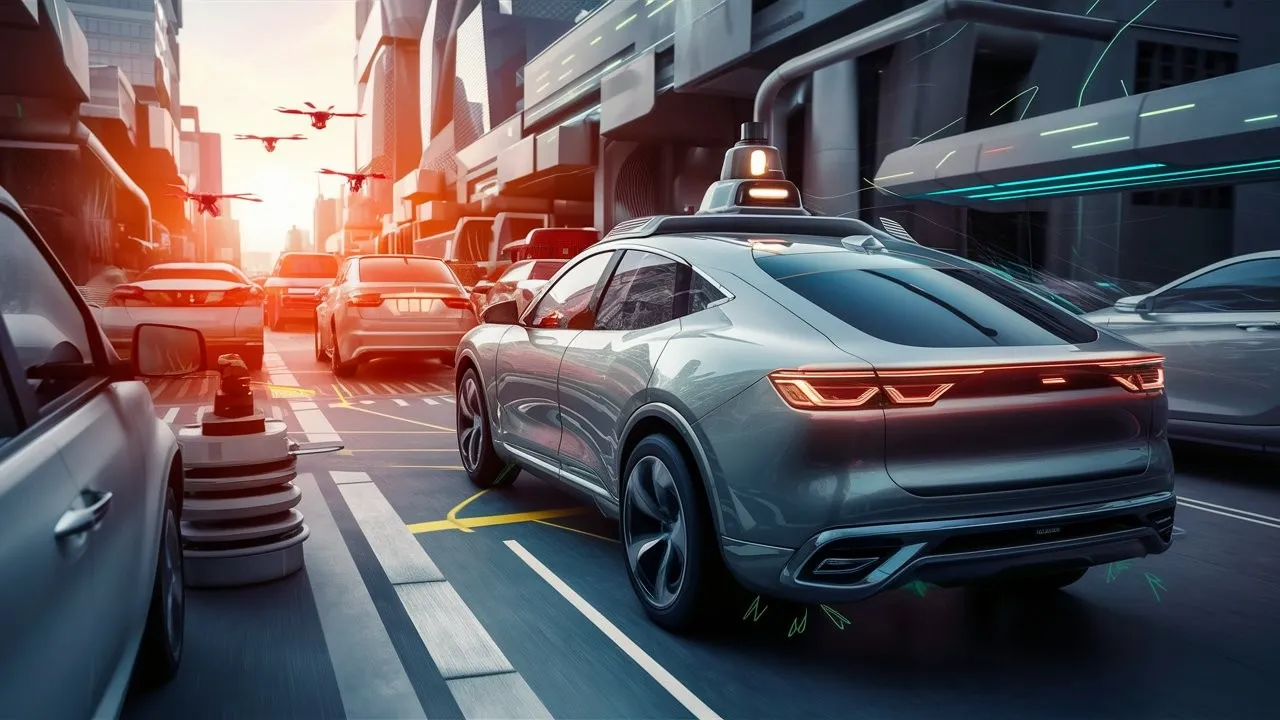
AI driving assistant systems are revolutionizing how we interact with vehicles, blending technology with driving skill to improve safety, comfort, and efficiency. From adaptive cruise control to collision avoidance, these systems use artificial intelligence to anticipate and react faster than human reflexes. The result is a driving experience that is safer, smarter, and increasingly connected.
In everyday life, these systems are no longer luxury options—they are becoming standard features, guiding drivers, reducing errors, and paving the way for semi-autonomous and fully autonomous vehicles.
Understanding How AI Driving Assistant Systems Work
At their core, AI driving assistant systems combine sensors, cameras, radar, and advanced software to interpret the environment. Machine learning algorithms process this data in real time, recognizing pedestrians, vehicles, traffic signs, and potential hazards.
By continuously analyzing driving conditions, these systems predict risks and provide timely interventions, from automatic braking to lane keeping. Unlike traditional safety features, AI enables vehicles to react proactively rather than reactively.
Enhancing Road Safety With Real-Time Support
One of the most significant advantages of AI driving assistant systems is their ability to enhance safety. Human error is a leading cause of accidents worldwide. Fatigue, distraction, and misjudgment often lead to dangerous situations that AI can help prevent.
For example, an AI system can detect a sudden pedestrian crossing or a car braking unexpectedly and intervene within milliseconds, sometimes avoiding collisions that a human driver may not respond to in time.
Real-Life Application and Everyday Benefits
Imagine commuting on a rainy morning. Visibility is limited, and traffic is dense. A vehicle equipped with AI driving assistants can adjust speed, maintain safe following distances, and warn the driver of lane drift or upcoming hazards.
For urban drivers, AI driving assistant systems reduce stress by supporting decision-making in congested areas. For long-distance travelers, adaptive cruise control and collision avoidance increase comfort and lower fatigue.
AI Driving Assistants in Traffic Management
Beyond individual vehicles, AI systems are transforming traffic management. Vehicles equipped with AI can communicate with each other and with infrastructure, predicting congestion and adjusting routes dynamically.
This collective intelligence not only reduces travel time but also lowers emissions, showing that AI driving assistant systems contribute to smarter, more sustainable mobility solutions.
The Role of Sensors and Advanced Algorithms
The backbone of AI driving assistants lies in sensors and algorithms. Cameras capture visuals, radar tracks moving objects, and ultrasonic sensors detect nearby obstacles.
Machine learning algorithms interpret this data to identify patterns, anticipate risks, and decide on optimal responses. Over time, these systems improve through continuous learning, becoming more accurate and reliable.
Supporting Driver Decision-Making
While fully autonomous driving is still evolving, AI driving assistant systems primarily serve as co-pilots. They provide critical insights that complement driver awareness.
Lane departure warnings, blind-spot detection, and traffic sign recognition help drivers make informed decisions. The goal is to create a partnership where technology enhances human judgment rather than replaces it entirely.
Long-Term Impact on Vehicle Ownership
Adopting AI-driven assistants may influence insurance premiums and maintenance practices. Vehicles equipped with these systems typically experience fewer accidents, which can translate into lower insurance costs.
In fleet management, AI assistants improve efficiency and safety, reducing vehicle downtime and operational costs. These benefits highlight why AI driving assistant systems are increasingly considered essential in modern vehicles.
AI Driving Assistants and Autonomous Vehicles
AI driving assistants are foundational for autonomous vehicle development. Semi-autonomous vehicles rely on these systems to manage tasks like highway driving, lane changes, and obstacle detection.
The technology provides the building blocks for fully autonomous cars, gradually increasing driver trust and public acceptance of automated mobility.
Addressing Safety Concerns and Reliability
Despite their advantages, some drivers remain cautious. Reliability, software bugs, and sensor limitations are legitimate concerns. Manufacturers mitigate risks through rigorous testing, real-world scenario simulations, and redundancy systems.
Transparency in operation and clear driver alerts help maintain trust, making AI driving assistant systems safer and more predictable.
Personalization and Adaptive Learning
Modern AI assistants learn driver behavior and adapt accordingly. Aggressive braking, cornering habits, and preferred routes can be analyzed to optimize system responses.
Personalized interventions ensure the technology feels natural and supportive rather than intrusive. Adaptive learning also enhances long-term safety outcomes.
Economic and Environmental Benefits
By reducing accidents, smoothing traffic flow, and improving fuel efficiency, AI driving assistants generate economic and environmental advantages. Less congestion means lower emissions, while fewer collisions save repair and medical costs.
From a societal perspective, AI driving assistant systems deliver broad-scale benefits that extend well beyond individual drivers.
Integration With Connected Infrastructure
Connected vehicles represent the next step in AI-driven mobility. AI systems integrated with traffic lights, road sensors, and other vehicles enable predictive routing, adaptive speed adjustments, and early hazard warnings.
Such integration enhances overall transportation efficiency and reduces risks, creating a cooperative ecosystem between vehicles and smart city infrastructure.
Real-World Examples From Leading Automakers
Many leading automakers have implemented AI driving assistants across their fleets. Features such as Tesla’s Autopilot, Volvo’s Pilot Assist, and Mercedes-Benz’s Drive Pilot showcase the range and capability of these systems.
Drivers report fewer near-misses, improved highway comfort, and reduced cognitive load. AI driving assistant systems are demonstrating tangible, everyday value in both professional and consumer settings.
The Role of AI in Predictive Maintenance
Beyond safety, AI driving assistants contribute to predictive maintenance. Sensors monitor vehicle components and driving behavior to anticipate wear and potential failures.
Early alerts about tire pressure, brake wear, or engine performance enable timely interventions, extending vehicle lifespan and reducing unexpected repair costs.
Psychological Impact on Drivers
Drivers often report higher confidence and reduced stress with AI assistance. Knowing that the vehicle can alert them to hazards or assist with critical tasks encourages safer and more relaxed driving habits.
Behavioral studies suggest that trust in AI co-pilots can reinforce positive driving habits, complementing safety features with cognitive support.
Global Trends in AI Driving Assistant Adoption
Globally, adoption is fastest in regions with strong technological infrastructure and regulatory support. Urban centers with high traffic congestion benefit most immediately, but adoption is expanding rapidly across suburban and rural areas.
Consumer acceptance grows as awareness increases, highlighting the importance of education and transparency in scaling AI driving assistant systems worldwide.
Challenges and Future Developments
Challenges remain in software reliability, sensor limitations, and human-machine interaction. Manufacturers continue to refine AI algorithms, introduce redundancy measures, and improve user interfaces.
Future AI driving assistant systems may incorporate fully autonomous capabilities, seamless vehicle-to-infrastructure communication, and advanced predictive analytics.
Building Trust Through Transparency and Education
The success of AI driving assistants depends on driver trust. Clear communication, easy-to-understand feedback, and transparent system operation help drivers understand how AI complements their skills.
Public education campaigns, simulator experiences, and in-vehicle tutorials are key strategies for fostering confidence and adoption.
Why AI Driving Assistants Are Becoming Standard
As vehicles become more complex, AI driving assistants provide a practical solution to ensure safety, efficiency, and convenience. They represent a bridge between human control and autonomous mobility.
Increasing regulatory approval, positive consumer feedback, and tangible safety outcomes suggest that AI driving assistant systems will become standard features in all modern vehicles, shaping the future of mobility for years to come.
Read also:
9057555597
nasik fatafat old result
wellhealthorganic.com:vegetarian protein sources
5612425780