


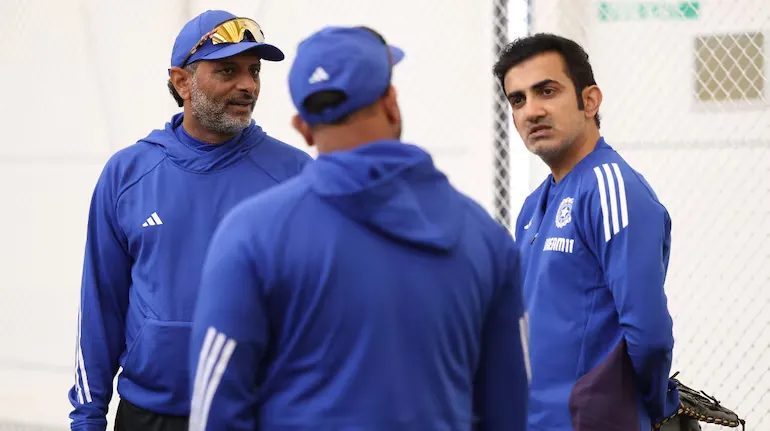
Coaching Staff Changes often signal the beginning of a new era for a sports franchise, acting as the catalyst for either a spectacular turnaround or a period of prolonged uncertainty. When a team decides to move in a different direction, the focus usually lands squarely on the head coach, yet the true complexity of the transition lies in the secondary layers of the staff. These shifts are about more than just a new face at the podium; they represent a total overhaul of the tactical philosophy, the daily training habits, and the psychological environment of the locker room.
The arrival of a new group of mentors creates a ripple effect that touches every single person in the organization, from the superstar veteran to the undrafted rookie fighting for a roster spot. For players, these transitions can feel like a corporate merger where you suddenly have to learn a new language and prove your worth to a boss who didn’t hire you. It is a period of high anxiety and immense opportunity, where the established hierarchy is often dismantled in favor of a fresh perspective.
We often underestimate the sheer volume of work that goes into coordinating these staff transitions during the short offseason window. A new head coach doesn’t just show up with a whistle; they arrive with a “coaching tree” of trusted assistants who have spent years developing a shared shorthand. When these groups move as a unit, they bring a pre-packaged culture that can instantly replace the stagnation of a previous regime, provided the players are willing to buy into the new vision.
Expertise in professional sports management suggests that the most successful Coaching Staff Changes are those that address the specific cultural deficits of the previous staff rather than just hiring the most popular name available. If a team struggled with discipline and technical errors, they might seek out a “drill sergeant” style of assistant staff. Conversely, a team that was stifled by a rigid, old-school approach might look for a group of young, analytics-driven minds to unlock their dormant creativity.
The Strategic Importance of Offensive and Defensive Coordinators
While the head coach is the “CEO” of the team, the coordinators are the “COOs” who handle the intricate details of the game plan every single week. When a team undergoes a coordinator shift, the players often have to learn an entirely new playbook that uses different terminology and demands different physical traits. This is why we often see a “regression” period immediately following a hire, as the athletes spend more time thinking about their assignments than playing with instinct.
A brilliant offensive coordinator can revitalize a struggling quarterback’s career simply by changing the launch point of his throws or simplifying his progressions. We have seen numerous examples of “washed up” veterans finding a second life because a new staff recognized a talent that the previous regime had overlooked. This ability to tailor a system to the available personnel is the hallmark of an elite assistant coach and a primary reason why some franchises are willing to pay millions for their services.
Defensive shifts are often even more jarring for the roster, as the transition from a 3-4 system to a 4-3 system—or vice-versa—can make certain players obsolete overnight. A linebacker who excelled in one system might find himself too small or too slow for the requirements of the new coordinator. These Coaching Staff Changes force the front office to make difficult decisions about which players to keep and which to trade, leading to a period of high roster turnover that can last for several seasons.
Trustworthiness in a new coaching staff is built during the quiet months of the spring, long before the first whistle of training camp. It is during the individual meetings and the early film sessions where the coaches prove their competence to the players. If a player feels that the new coordinator truly has a plan to make them more successful and more valuable in the open market, the “buy-in” happens almost instantly. If not, the locker room can quickly become divided.
The Unsung Heroes: Position Coaches and Specialists
Beyond the high-profile coordinators, the position coaches are the individuals who spend the most time with the players on a daily basis. An offensive line coach or a defensive backs coach is often the most influential person in a player’s professional life. When these specific roles change, the technical foundation of the team is reset. A new offensive line coach might demand a different footwork technique that takes months to master, leading to early-season struggles that test the patience of the fanbase.
These specialists are often the “secret sauce” of a championship team. A great quarterbacks coach is part psychologist and part mechanic, working on everything from a player’s throwing motion to their mental resilience after an interception. When a team retains a head coach but changes these specific position mentors, it is often a sign that the organization believes the overall vision is correct, but the “teaching” at the granular level was failing.
The move toward specialized coaching has also seen the rise of “game management” coaches and “situational” specialists. These individuals are responsible for the high-pressure decisions like when to call a timeout or when to challenge a play. This evolution in Coaching Staff Changes shows a growing recognition that the modern game is too fast and too complex for one person to handle every variable. By delegating these tasks to specialists, the head coach is free to focus on the broader emotional state of the team.
We must also consider the role of the strength and conditioning staff, as well as the medical team, in these transitions. Often, a new head coach will bring in their own performance staff to overhaul the team’s approach to injury prevention and recovery. These changes are less visible to the fans but can have a massive impact on the team’s “availability” throughout the grueling seventeen-game season. A team that is consistently healthy is often just a team with a superior performance staff.
Navigating the Challenges of Mid-Season Transitions
While most shifts happen in the winter, a mid-season coaching change is a desperate “break glass in case of emergency” move that presents a unique set of challenges. In these scenarios, there is no time to install a new playbook or change the roster. The interim staff must find a way to simplify the existing system and provide a psychological “spark” to a group of players who are likely demoralized by a string of losses and the firing of their previous leader.
The interim coach is often a popular assistant who already has a strong relationship with the players. Their goal is not to reinvent the wheel, but to remove the “noise” and allow the athletes to play with freedom. Sometimes, this lead-from-the-front approach works brilliantly, leading to a “new coach bump” where the team plays with an intensity that was missing for months. However, these successes are often short-lived if the underlying structural issues of the staff are not eventually addressed.
During these chaotic periods, the stability of the remaining assistant coaches is vital. They act as the “connective tissue” that keeps the ship afloat while the organization searches for a permanent replacement. It is a period of immense professional uncertainty for these assistants, as they know their jobs are likely on the line regardless of how well they perform. This “professional purgatory” is one of the most difficult environments to work in within the world of professional sports.
The decision-making process for the front office during a mid-season shift is fraught with risk. If they promote the wrong person, they risk losing the locker room entirely. If they wait too long to make a change, they risk wasting a year of their star players’ primes. It is a delicate balancing act that requires a deep understanding of the team’s internal dynamics, something that can only be achieved by having a front office that is closely “plugged in” to the daily life of the facility.
The Role of Analytics and Modern Hiring Trends
The way franchises evaluate potential Coaching Staff Changes has been transformed by the availability of data and psychological profiling. Owners and General Managers are no longer just looking at a coach’s win-loss record; they are looking at their “efficiency” in specific situations. They want to know how well a coach’s players developed over time and how their “scheme” performed against the league’s top-tier offenses or defenses.
This data-driven approach has led to the hiring of younger, more “innovative” coaches who may not have decades of experience but possess a superior understanding of modern tactical trends. The “McVay Effect”—named after the success of the Los Angeles Rams’ head coach—has led to a league-wide search for the next young genius who can revolutionize an offense. While this has been successful for some, it has also led to the hiring of coaches who may have the tactical knowledge but lack the leadership experience to manage fifty-three different personalities.
The hiring process now involves extensive interviews that can last for days, where coaches are asked to break down film, explain their leadership philosophy, and present a detailed plan for the team’s first hundred days. This rigorous “audition” ensures that the front office has a clear understanding of what they are getting before they hand over the keys to the franchise. It is a move away from the “good old boys” network of the past and toward a more meritocratic and professionalized hiring system.
We also see a greater emphasis on “diversity of thought” within coaching staffs. Modern head coaches are looking for assistants who will challenge their ideas rather than just “yes men.” By building a staff with different backgrounds and different tactical perspectives, a head coach can avoid the “groupthink” that often leads to a stagnant and predictable team. This intellectual diversity is a key component of a staff that can adapt and evolve throughout the season.
Managing Fan Expectations and Media Scrutiny
The public reaction to Coaching Staff Changes is often a mix of wild optimism and cynical skepticism. Fans who have suffered through years of losing are desperate to believe that the new staff has the “magic touch” that will lead them to the Super Bowl. This creates an environment of intense pressure from day one, where every preseason mistake is analyzed by a local media that is hungry for a “new era” storyline.
The media’s role in these transitions is significant, as they shape the narrative that the fans consume. If the media portrays the new staff as “unprepared” or “out of their league,” it can create a toxic environment that seeps into the facility. Coaches have to be masters of communication, not just with their players but with the press and the public. They must be able to sell their vision and stay composed when the early results don’t match the offseason hype.
Social media has added another layer of complexity to this dynamic. Fans can now directly voice their frustrations to the team, and “fire the coach” hashtags can trend within minutes of a bad loss. A modern coaching staff must have a “thick skin” and the ability to filter out the external noise. They must trust their process and their people, even when the outside world is calling for their heads after a three-game losing streak.
Ultimately, the success of a staff change is measured in years, not weeks. It takes time for the culture to take root and for the players to fully master the new systems. The most successful organizations are those that show patience and provide their coaching staff with the resources and the time they need to build something sustainable. Consistency is a “competitive advantage” in a league that is often defined by knee-jerk reactions and constant turnover.
The relationship between the head coach and the General Manager is the most critical factor in the success of these changes. If the “personnel” doesn’t match the “scheme,” the team will struggle regardless of how talented the coaches are. There must be a shared vision for what the team should look like and what kind of players they need to acquire. This synergy between the front office and the sidelines is what defines the most successful “dynasties” in sports history.
As we look at the landscape of the league, it is clear that the “carousel” of staff changes will never stop. The pressure to win is too high, and the financial stakes are too great for teams to settle for mediocrity. Every winter, a new group of coaches will be given the opportunity of a lifetime, and a new group of fans will dare to hope that their team has finally found the “missing piece” to the championship puzzle.
The human element of these changes is what makes the sport so compelling. It is about the teacher and the student, the leader and the follower. It is about the struggle to adapt and the triumph of a shared vision. When a coaching staff and a roster of players truly “click,” it is a beautiful thing to watch—a symphony of movement and strategy that justifies all the hours of preparation and all the stress of the transition.
Every hire is a gamble, and every staff is an experiment. There are no guarantees in professional sports, and even the most “perfect” staff can fail if the timing or the luck isn’t right. But the search for that perfect staff is what keeps us engaged and what keeps the league moving forward. It is a constant pursuit of excellence that defines the spirit of the game and the nature of professional competition.
In the end, the legacy of a coaching staff is found in the development of the players they leave behind and the standards they established during their tenure. Whether they won a championship or simply left the team in a better place than they found it, their impact is undeniable. The “coaching carousel” might be chaotic, but it is the heartbeat of the sport, ensuring that the beautiful game never stays still for long.
usmnt vs guatemala national football team lineups
mexico national football team vs saudi arabia national football team lineups
spain national football team vs netherlands national football team timeline
usmnt vs costa rica national football team lineups
uswnt vs republic of ireland women’s national football team lineups