


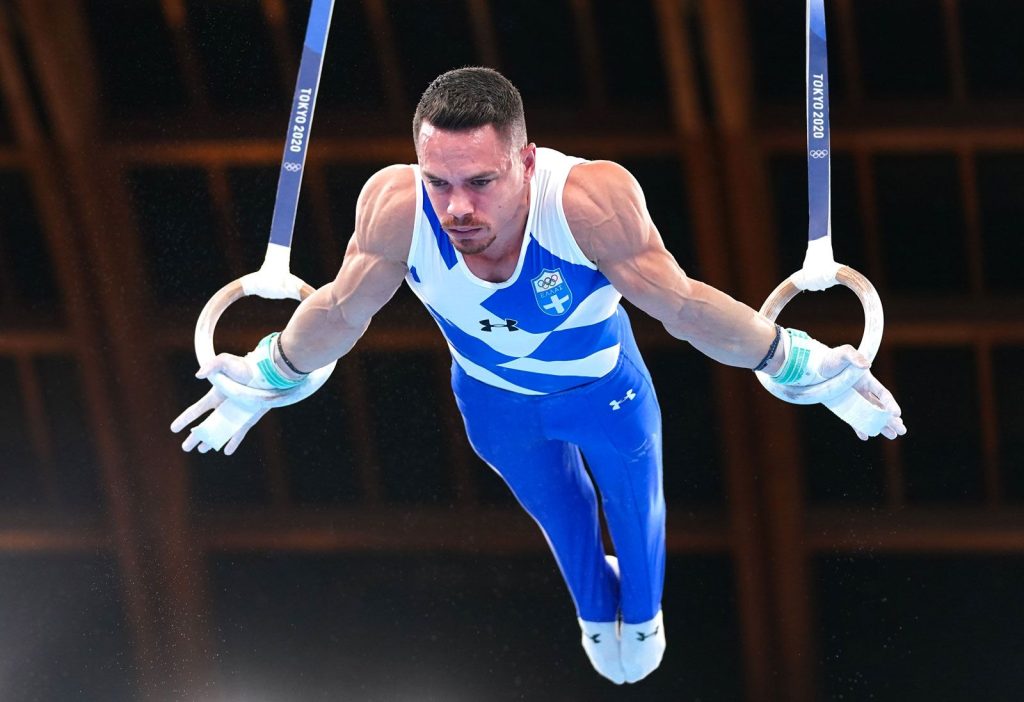
Introduction: The Majesty of Olympic Rings Competition
When the world’s best gymnasts take to the rings at the Olympic Games, they demonstrate what may be the purest display of strength in all of sports. The gymnastics rings Olympics event represents the pinnacle of static strength mastery, combining raw power with balletic grace. This 2,500-word guide explores everything about this iconic apparatus:
✅ History and evolution of Olympic rings competition
✅ Breaking down the rules and scoring system
✅ Signature moves that define champions
✅ Training secrets of elite ring specialists
✅ Most memorable Olympic moments
✅ What to watch for in future competitions
Whether you’re a casual Olympics viewer or an aspiring gymnast, this guide will give you new appreciation for one of sport’s most demanding disciplines.
Chapter 1: The Origins and Evolution of Olympic Rings
From Ancient Training Tool to Modern Apparatus
The rings apparatus traces its roots to ancient Greece and Rome, where soldiers and athletes used similar devices for strength training. The modern version emerged in:
- Early 1800s: Friedrich Jahn incorporates rings into his German gymnastics system
- 1896 Athens: Rings debut as an Olympic event (men only)
- 1924 Paris: First standardized dimensions (height, cable length)
- 1950s: Soviet gymnasts revolutionize technique with iron cross mastery
Key Rule Changes Over Time
| Era | Major Developments |
|---|---|
| 1896-1920s | Basic strength holds only |
| 1930s-50s | Introduction of swing elements |
| 1980s-2000s | Difficulty scoring emphasizes dynamic moves |
| 2010s-present | Increased focus on connection value |
Chapter 2: Understanding the Apparatus
Technical Specifications
- Height: 5.75 meters (18.9 ft) floor to suspension
- Ring diameter: 18 cm (7.1 in) inner circle
- Cable length: Adjustable up to 3 meters
- Material: Wood core with non-slip coating
Why Rings Are the Ultimate Strength Test
Unlike other apparatuses:
- No solid base for momentum
- Constant instability requires micro-adjustments
- Must control both concentric and eccentric movements
Chapter 3: Olympic Scoring System Explained
Current Code of Points Breakdown
- Difficulty Score (D)
- Iron Cross = C element (0.3)
- Maltese = E element (0.5)
- Azarian to Handstand = F element (0.6)
- Execution Score (E)
- Starts at 10.0, deductions for:
- Bent arms (-0.3)
- Body angle deviations (-0.1 to -0.3)
- Swinging (-0.1 per occurrence)
- Final Score = D + E
2024 Paris Updates
- New emphasis on hold durations
- Stricter angle requirements for crosses
- Bonus for innovative dismount connections
Chapter 4: Iconic Ring Moves and Skills
The Strength Pyramid
| Move | Difficulty | Muscles Worked |
|---|---|---|
| Support Hold | A | Delts, pecs |
| Iron Cross | C | Lats, pecs |
| Maltese | E | Entire upper chain |
| Victorian | F | Peak strength test |
Most Spectacular Dismounts
- Double Back Tuck (D score)
- Full-twisting Double Layout (E score)
- Stuck Landing (0.3 bonus)
Chapter 5: Training Like an Olympic Rings Specialist
Elite Training Regimen
- Morning session (3 hours):
- 30 minutes mobility work
- 60 minutes static hold training
- 90 minutes skill refinement
- Afternoon session (2 hours):
- Weighted ring exercises
- Video analysis
- Prehab/recovery
Specialized Equipment Used
- Wooden rings for grip development
- Resistance bands for assisted training
- Weight vests up to 20kg for overload
Chapter 6: Memorable Olympic Moments
Top 5 Rings Performances in History
- Aleksei Nemov (2000 Sydney) – 9.787 execution
- Chen Yibing (2008 Beijing) – “Lord of the Rings” perfection
- Eleftherios Petrounias (2016 Rio) – Flawless Maltese
- Liu Yang (2020 Tokyo) – Record 6.4 difficulty
- Arthur Zanetti (2012 London) – Brazil’s first gold
Statistical Dominance
- Most medals: 3 (Yuri Chechi)
- Highest score: 16.233 (2020 Tokyo)
- Oldest champion: 30 years (Zanetti)
Chapter 7: What Makes a Perfect Routine
Anatomy of Gold-Medal Performance
- Opening Sequence (3-4 strength elements)
- Swing Phase (2-3 dynamic transitions)
- Combination Bonus (Connected E+F elements)
- Dismount (Stick landing critical)
Judges’ Scorecard Analysis
# Sample scoring breakdown
difficulty = 6.2
execution = 9.033
neutral_deductions = 0.0
final_score = 15.233 # Gold medal range
Chapter 8: Future of Olympic Rings
Paris 2024 Predictions
- New moves: One-arm crosses may debut
- Young contenders: Adem Asil (TUR)
- Tech impact: AI-assisted judging
Potential Rule Changes
- Women’s division consideration
- Team rings event proposal
- Difficulty cap adjustments
Conclusion: Why Rings Remain the Crown Jewel
The gymnastics rings Olympics event represents the ultimate marriage of strength and artistry. As we look toward Paris 2024, this apparatus continues to push human potential while honoring its ancient roots.