
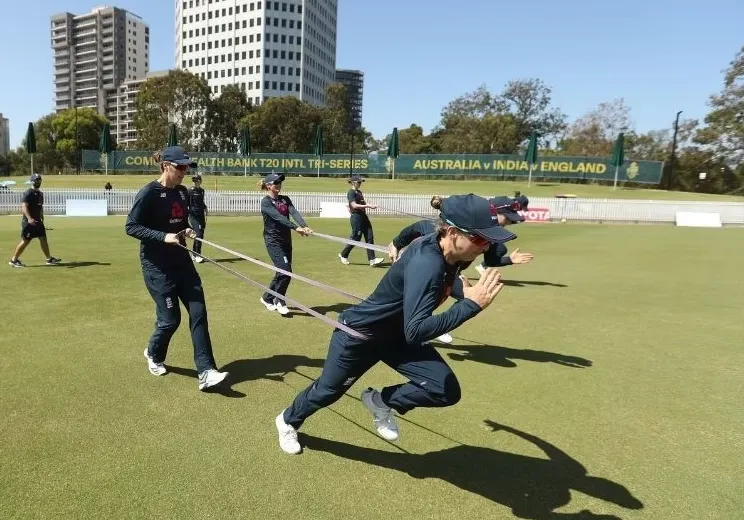
Cricket fitness training drills are no longer optional extras in modern cricket; they are the backbone of elite performance. Whether you’re chasing a total under lights or bowling the final over of a tense match, your fitness decides how well your skills hold up under pressure.
There was a time when cricket was seen as a “skill-only” sport. That era has long passed. Today’s game demands explosive sprinting, sharp reflexes, powerful core stability, and sustained endurance. From domestic circuits in India to international tournaments governed by the International Cricket Council, fitness standards are higher than ever.
This comprehensive guide explores training methods trusted by professionals, practical routines for club cricketers, and science-backed insights to help players at every level.
Why Fitness Defines Modern Cricket
Cricket has evolved dramatically in the last two decades. The rise of fast-paced formats such as the Indian Premier League has transformed physical expectations.
Players now cover more ground in the field, sprint harder between wickets, and maintain high intensity for extended spells. The margin between winning and losing often comes down to one extra dive or one quicker sprint.
That’s where Cricket fitness training drills become critical. They prepare the body not just to perform, but to sustain performance across formats.
The Science Behind Cricket-Specific Conditioning
Unlike pure endurance sports, cricket demands mixed energy systems. A batter may stand still for minutes, then explode into a 22-yard sprint. A fast bowler may bowl six high-intensity deliveries, rest briefly, and repeat.
Effective Cricket fitness training drills combine aerobic endurance with anaerobic bursts. Strength training enhances power transfer, while agility drills improve directional changes.
Sports science research shows that rotational strength, hip mobility, and hamstring stability significantly reduce injury risk. These areas form the foundation of cricket-specific conditioning programs worldwide.
Warm-Up Routines That Activate Performance
Professional teams never skip structured warm-ups. Dynamic stretches increase blood flow and prepare joints for high-intensity movement.
Mobility drills for shoulders and hips are particularly important. Bowlers rely heavily on shoulder rotation, while batters depend on hip flexibility for stroke range.
Incorporating movement-based Cricket fitness training drills before practice sessions reduces muscle stiffness and improves reaction time.
Even legends like Virat Kohli have openly credited structured warm-ups and fitness discipline for career longevity.
Speed and Sprint Training for Match Impact
Short sprints win matches. Quick singles disrupt field placements. Sharp acceleration saves boundaries.
Sprint-focused Cricket fitness training drills include shuttle runs, resisted sprints, and interval-based acceleration sessions. Training over 20–30 meters mimics match conditions effectively.
Players often underestimate recovery between sprints. Structured rest intervals improve repeat sprint ability, which is essential during long fielding innings.
Consistent sprint training enhances lower-body power and cardiovascular efficiency simultaneously.
Agility and Reflex Enhancement
Cricket is unpredictable. A deflection off the bat can change direction instantly. Fielders must react without hesitation.
Agility ladder exercises and cone drills sharpen foot coordination. Reaction-based drills, where players respond to visual or auditory cues, replicate real-game unpredictability.
Modern Cricket fitness training drills emphasize multi-directional movement. Straight-line speed alone isn’t enough. Side steps, pivots, and quick turns are equally important.
Elite fielders often train with tennis balls to sharpen hand-eye coordination under speed pressure.
Strength Training for Power and Stability
Strength is not about bulking up. It’s about functional performance.
Compound lifts like squats and deadlifts build lower-body stability. Core exercises enhance balance during shots and bowling actions.
Upper-body strength helps generate bat speed and bowling momentum. However, mobility must remain intact to avoid stiffness.
Structured Cricket fitness training drills incorporate moderate weights with controlled repetitions. Stability exercises using medicine balls and resistance bands improve coordination.
Players from Australia have long emphasized gym-based conditioning as part of their competitive edge.
Endurance Building for Longer Formats
Test cricket remains the ultimate endurance test. Fielding for multiple sessions demands stamina beyond short bursts.
Long-distance running builds aerobic capacity. However, cricket-specific endurance comes from interval-based circuits.
Blending jogging with short sprints replicates match rhythm. Effective Cricket fitness training drills ensure players remain sharp even on day five of a Test.
Hydration and nutrition also influence endurance. Fitness programs now integrate dietary guidance to maximize output.
Injury Prevention Through Smart Drills
Injuries can derail promising careers. Hamstring strains, side strains, and shoulder issues are common in cricket.
Preventive Cricket fitness training drills focus on strengthening vulnerable areas. Eccentric hamstring exercises reduce sprint-related injuries. Rotator cuff strengthening protects bowlers.
Flexibility routines after training maintain muscle elasticity. Foam rolling and active recovery sessions improve circulation.
Boards worldwide, including the Board of Control for Cricket in India, invest heavily in sports medicine and physiotherapy support.
Core Stability and Rotational Power
Batting and bowling both rely on rotational force. Weak core muscles reduce efficiency and increase injury risk.
Planks, Russian twists, and cable rotations form part of advanced Cricket fitness training drills programs.
Rotational medicine ball throws simulate batting movements. Controlled resistance enhances shot power.
A strong core improves posture during long fielding sessions and reduces fatigue.
Fielding-Specific Conditioning
Modern cricket celebrates athletic fielding as much as big hitting.
Dive training builds confidence. Rolling techniques minimize impact injuries. Repeated catching drills under fatigue simulate match conditions.
Well-designed Cricket fitness training drills combine sprinting with catching practice. For example, sprint 20 meters, dive, recover, and throw in one fluid motion.
This integration ensures that fitness translates directly into match performance.
Mental Fitness and Focus Training
Physical conditioning alone isn’t enough. Concentration lapses cost runs and wickets.
Breathing exercises and visualization techniques sharpen focus. Elite athletes often work with sports psychologists.
Mental resilience training now complements Cricket fitness training drills to ensure players remain composed during pressure moments.
High-stakes tournaments organized by the International Cricket Council often highlight the importance of mental preparation alongside physical readiness.
Youth Development and Long-Term Fitness
Young cricketers must avoid overtraining. Growth phases require careful monitoring.
Age-appropriate Cricket fitness training drills focus on technique rather than heavy resistance. Bodyweight exercises build foundational strength.
Coaches emphasize correct running form early. Proper mechanics prevent chronic injuries later.
Building habits at grassroots levels ensures smoother transition into professional cricket.
Fitness Tracking and Performance Metrics
Wearable technology has revolutionized training.
GPS trackers monitor distance covered and sprint intensity. Heart rate monitors assess recovery efficiency.
Data-driven Cricket fitness training drills allow personalized adjustments. Players identify weaknesses and track progress objectively.
Coaching staff analyze workload to prevent burnout during packed tournament schedules.
Recovery Strategies That Enhance Performance
Recovery is part of training.
Ice baths reduce inflammation after intense sessions. Sleep quality impacts muscle repair.
Active recovery workouts maintain mobility without overloading muscles.
Professional Cricket fitness training drills programs schedule recovery as carefully as intense workouts.
Ignoring recovery often leads to performance decline and injury risk.
Real-Life Example: Fitness Transformation
Consider how Ben Stokes improved his endurance and strength over the years. His ability to bowl long spells and play aggressive innings reflects structured conditioning.
Stories like these inspire young players. They prove that dedication to fitness reshapes careers.
Consistent effort in Cricket fitness training drills builds not just stamina, but confidence.
Integrating Skills with Fitness
The most effective training blends skills and conditioning.
Batting drills combined with sprint intervals simulate match pressure. Bowling drills followed by agility work build endurance under fatigue.
Holistic Cricket fitness training drills ensure that technical execution remains sharp even when tired.
This integrated approach mirrors real-game scenarios more accurately than isolated gym workouts.
Adapting Drills Across Formats
T20 demands explosive speed. ODIs require sustained intensity. Tests require mental and physical resilience.
Training programs adjust accordingly. Shorter formats focus more on high-intensity intervals. Longer formats emphasize endurance.
Flexible Cricket fitness training drills accommodate evolving tournament calendars and travel schedules.
Adaptability remains key in modern cricket’s demanding landscape.
Building a Personal Fitness Routine
Every player’s body responds differently. Customization improves results.
Consulting certified trainers ensures safe progression. Gradual overload strengthens muscles without shock.
Tracking improvement over weeks maintains motivation.
Consistency in Cricket fitness training drills ultimately defines growth. Small daily improvements compound into elite performance.
Cricket today rewards athletes who combine skill with superior conditioning. The modern player must sprint faster, dive further, and recover quicker than ever before. Structured training rooted in science, discipline, and adaptability empowers cricketers to meet these demands with confidence and resilience.
Read also:
faheem ashraf net worth
baap of rcb
manoj bhandage bowling speed
kapil dev 175 scorecard